June Newsletter – Key News and Trends Impacting Your Local Market

Since most California counties are beginning to lift restrictions, we will start to see the housing market steadily recover. Although an exact end date to quarantine does not exist, on May 20th, Governor Newsom confirmed that more than half of the state’s 58 counties were moving into phase two of the widely adopted “four-pronged approach.”
On June 3rd, the California Association of Realtors (CAR) released survey data sampling California agents and their clients over the last week of May. The results revealed that buyers and sellers are now operating under very different expectations about the real estate market: the majority of buyers expect home prices to be lower while only a small number of sellers are reducing their listing prices.
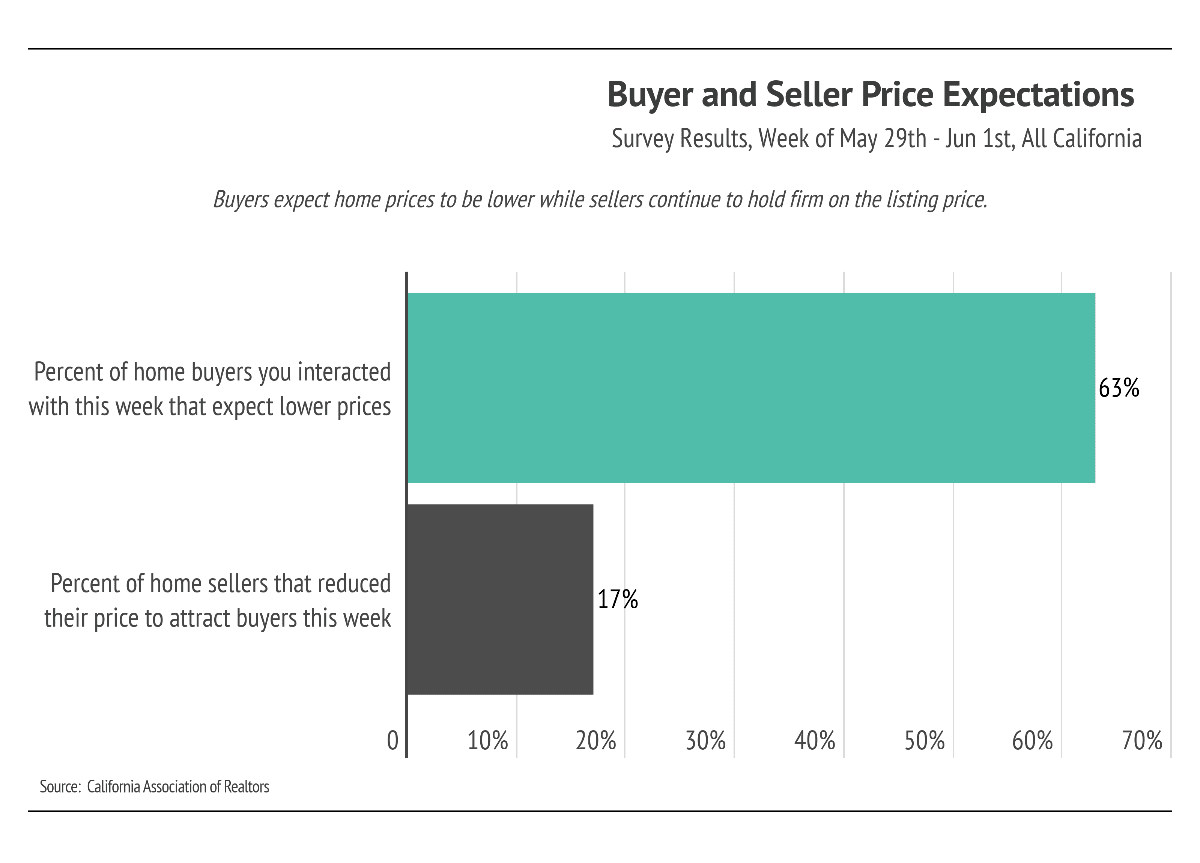
In the long run, who is right will depend on how long the economic recovery takes. In the short term, however, the data tells us that single-family home buyers appear to have wishful thinking.
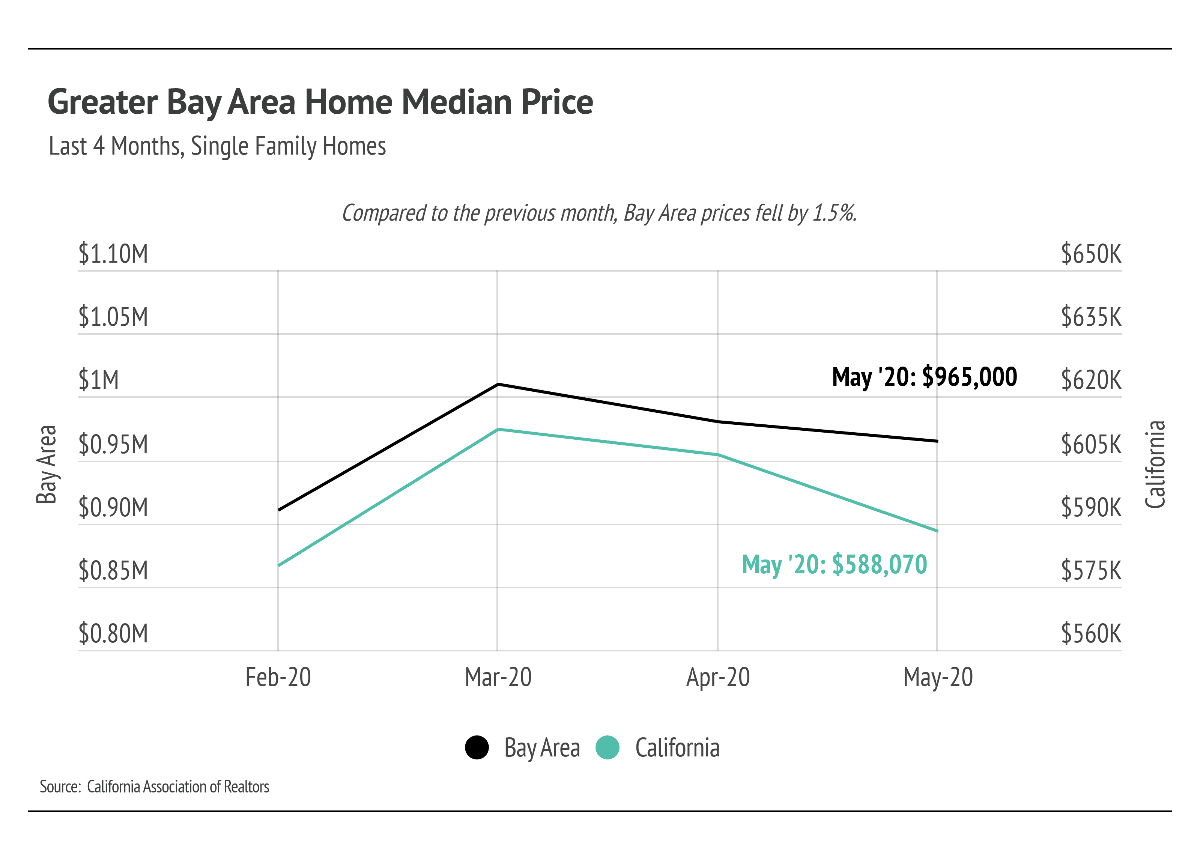
Greater Bay Area median home prices did not decline enough for sellers to cut the listing price. In May, single-family home prices dipped slightly compared to April, but they continued to look resilient. In fact, prices were still higher compared to February before the pandemic began.
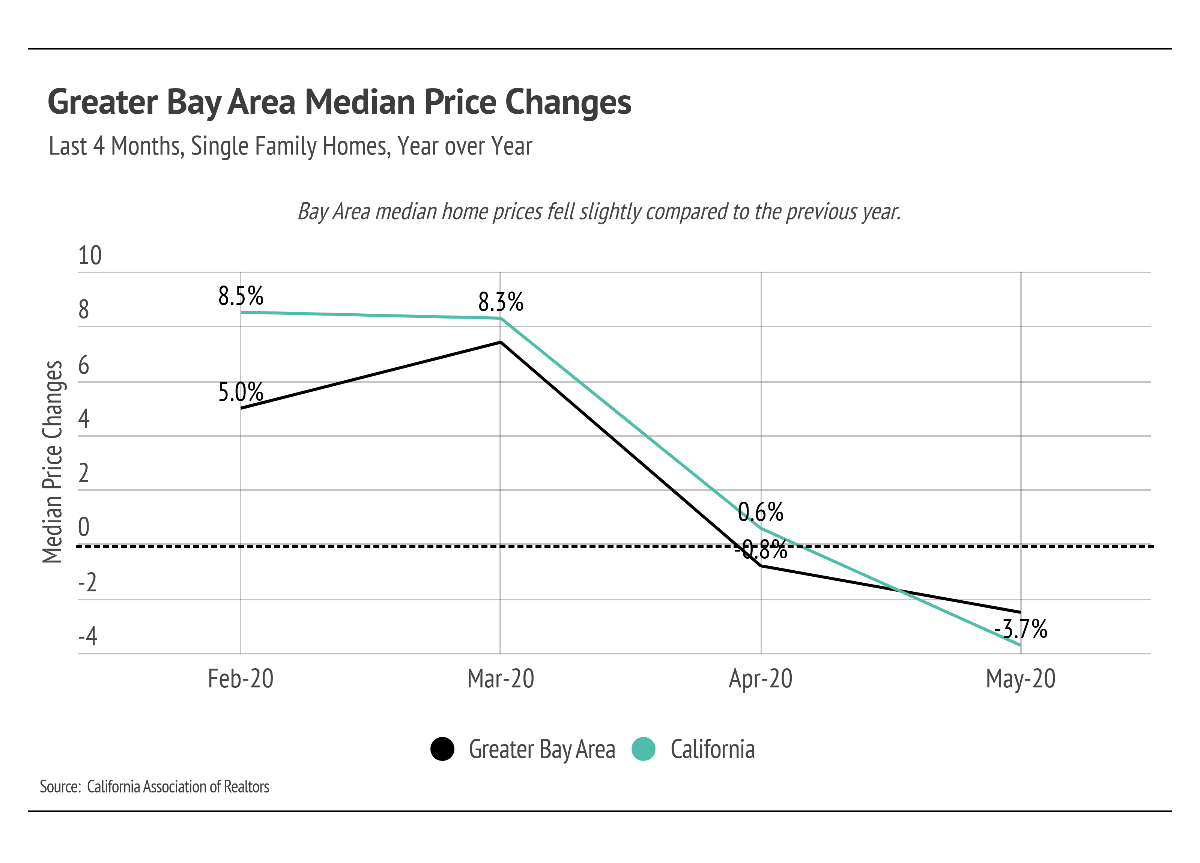
Compared yearly, prices were down slightly. Single-family home prices were only down by 3% in May year-over-year, trending in line with California as a whole since March.
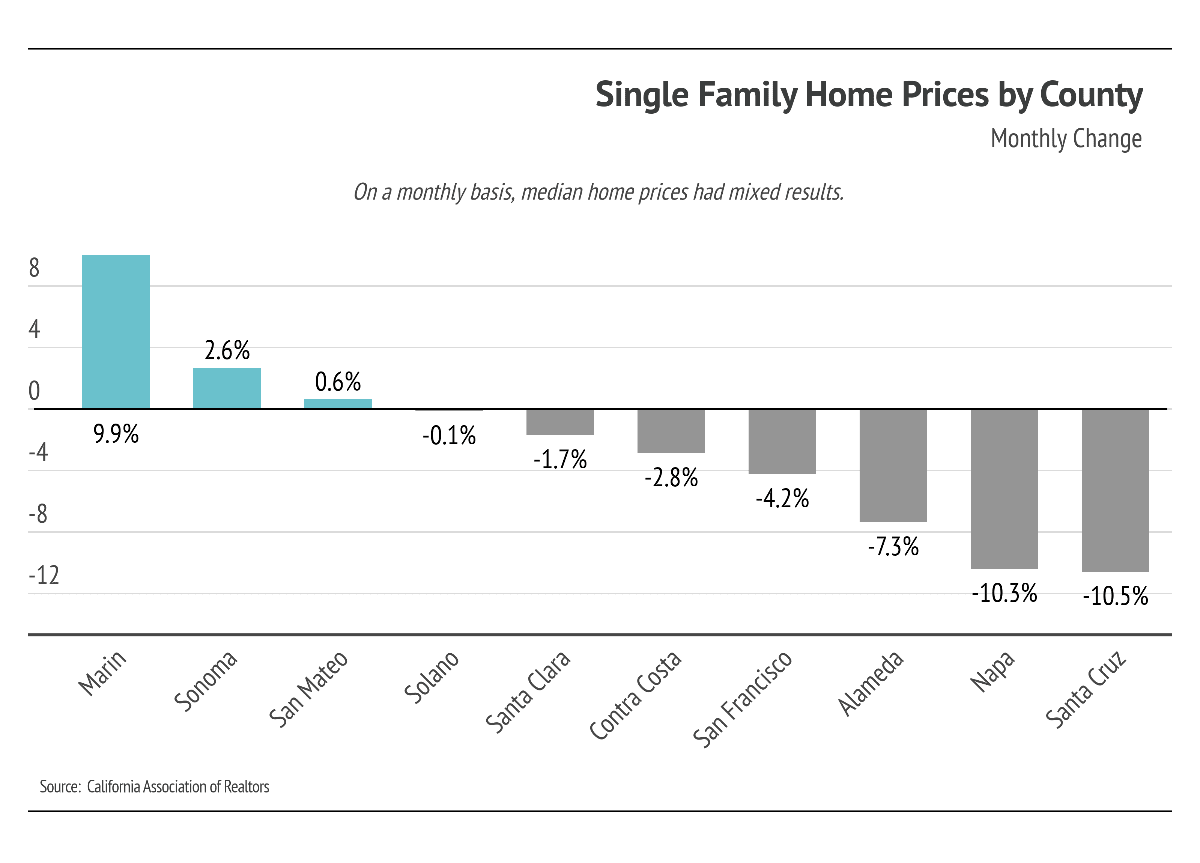
Broken down by county, May prices fell throughout most of the Greater Bay Area. In Napa and Santa Cruz, prices fell by double digits. Marin’s median price, notably, increased by 10%.
Weighing in on the subject in his June 3rd market update, Jordan Levine, Deputy Chief Economist at CAR, said:
“We [now] expect some price impacts eventually as a result of some of the negative economic impact. . . . The price impacts will be in the modest category of the low single digits for 2020.”
Evidence supports the idea that price declines will only be in the low single digits for the 2020 calendar year. The market continues to see a larger sell-side impact, meaning that housing supply has declined more than buyer demand. The survey data below shows that far more sellers withdrew listings than buyers withdrew offers.
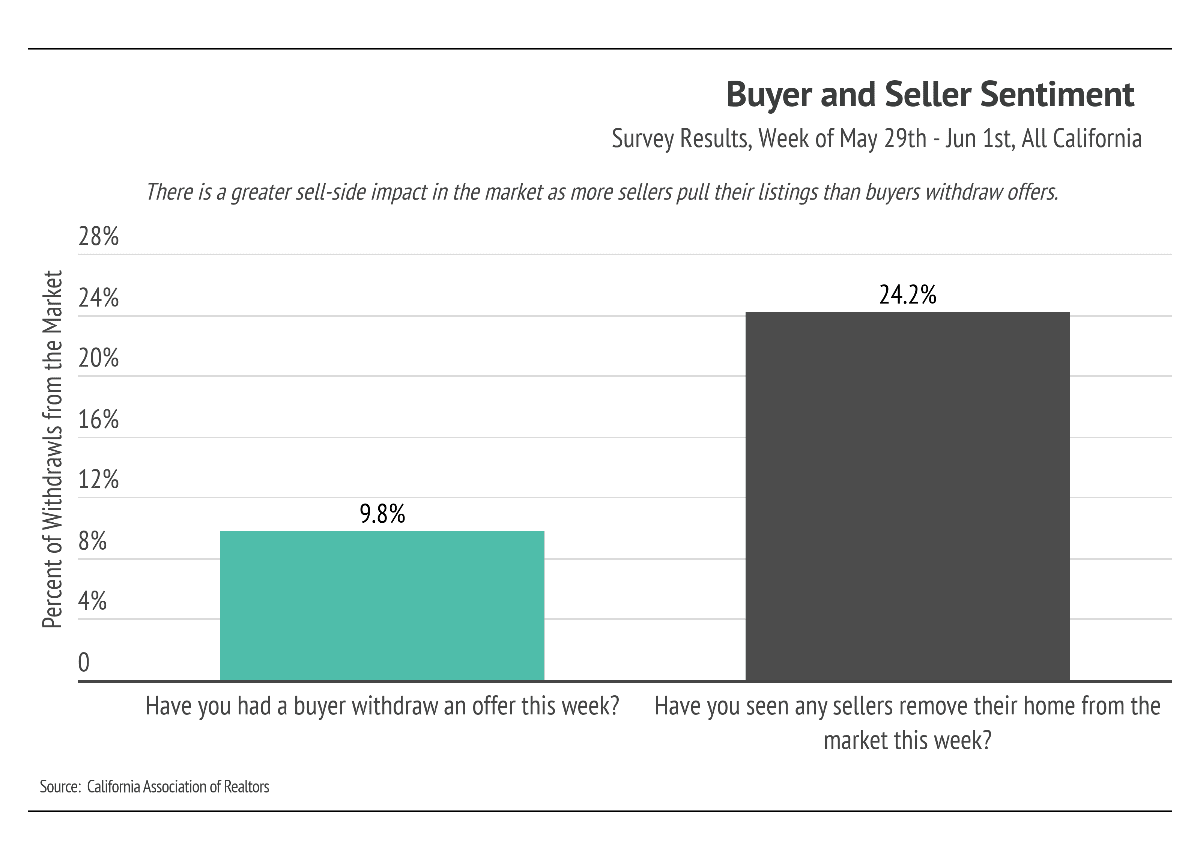
While sellers continue to grapple with the state of the market, California is again facing a major housing shortage, which prevents prices from dropping. The CAR survey also provided the most recent mortgage application data for both California and the United States. In May, California mortgage applications for home purchases (as opposed to refinances) rose significantly from April and are only down 1.7% from this time last year. Mortgage applications correlate with buyer intent to purchase a property and indicate the number of homes under contract and home sold.
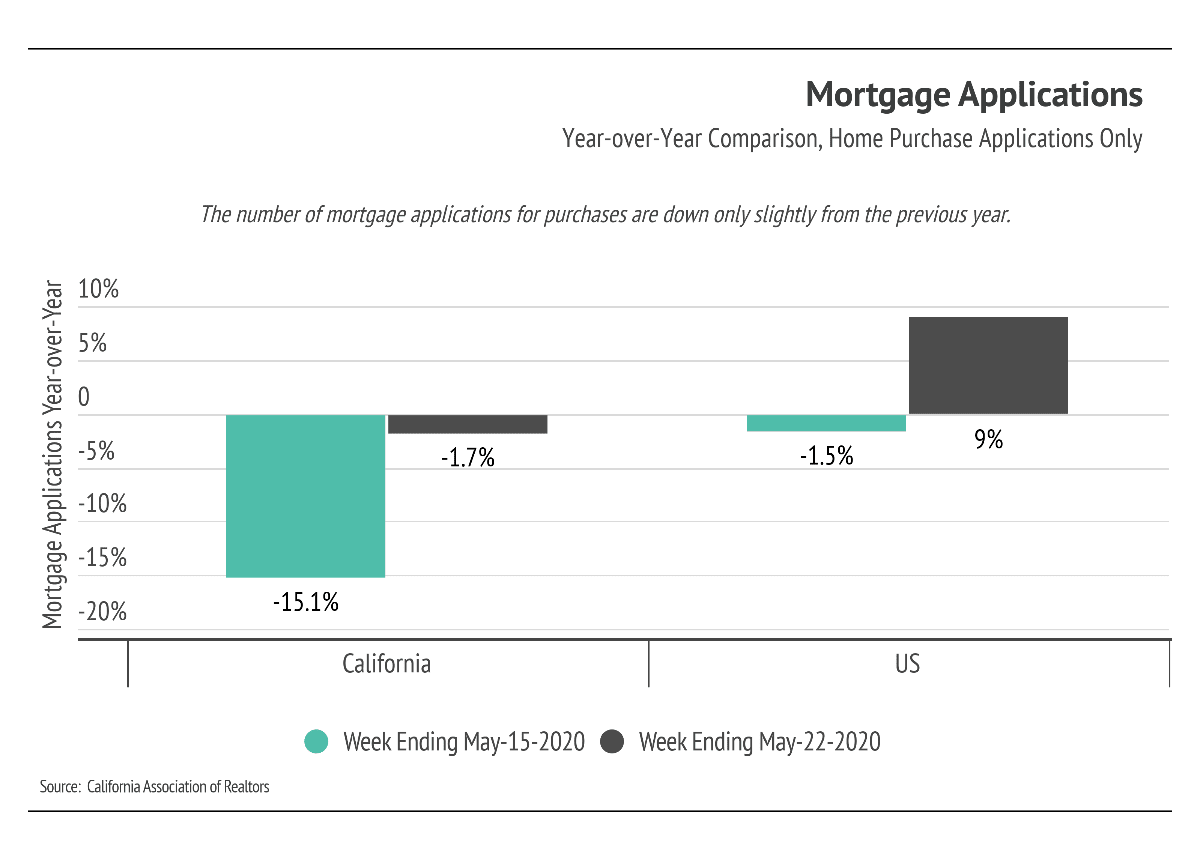
All of this is welcome news. The May data assures homeowners that their home equity is still intact as restrictions begin to lift. It should also encourage buyers who may have been delaying a home purchase to enter the market.
A fourth CAR survey result illustrates the degree to which both supply and demand is currently stagnating. Over half of the California realtors surveyed indicated that they had at least one client that was delaying buying or selling until conditions changed. We assume that this pent-up demand will give way in the coming months to more participation and market activity from both sides.
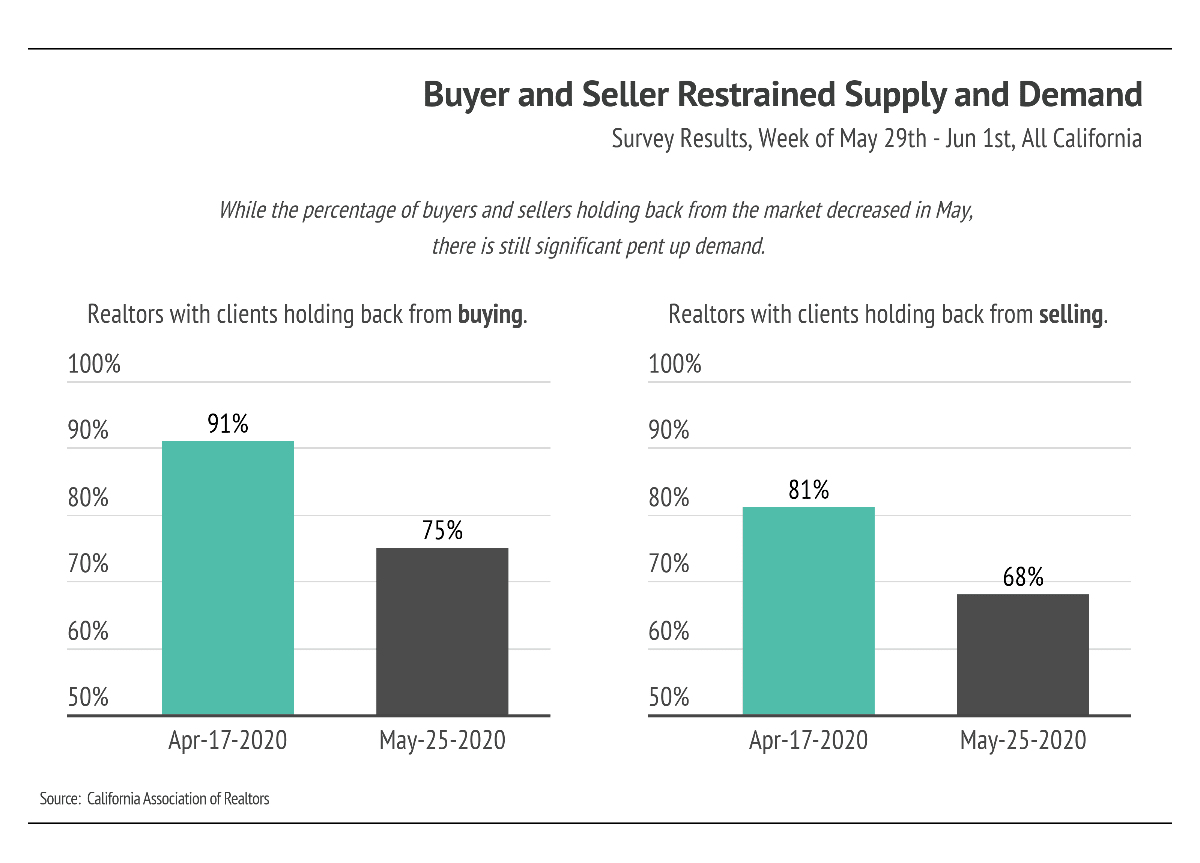
Alongside pent-up demand, there are the changes to daily living which may impact home purchasing decisions in the future. In order to ensure employee safety, companies have massively shifted toward a remote workforce, which creates new space requirements for potentially millions of Americans. As a result, millions of Americans may need to consider purchasing a new home that better accommodates work from home. Remote work also means employees can live almost anywhere. Without physical restrictions, employees may look elsewhere for places to live such as locations with lower costs of living. Between new housing requirements, low rates, and pent-up activity, there is potential for a busy summer buying season that is similar to what we usually see in the spring.
Stay up to date on the latest real estate trends.


A Bay Area Realtor's approach to schools, neighborhoods, and long-term value for families making a move

You’ve got questions and we can’t wait to answer them.