Quick Take:
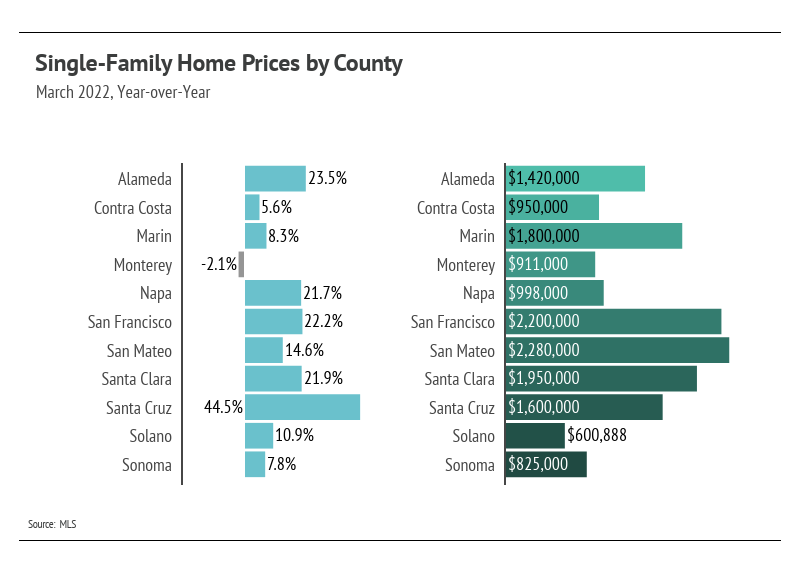
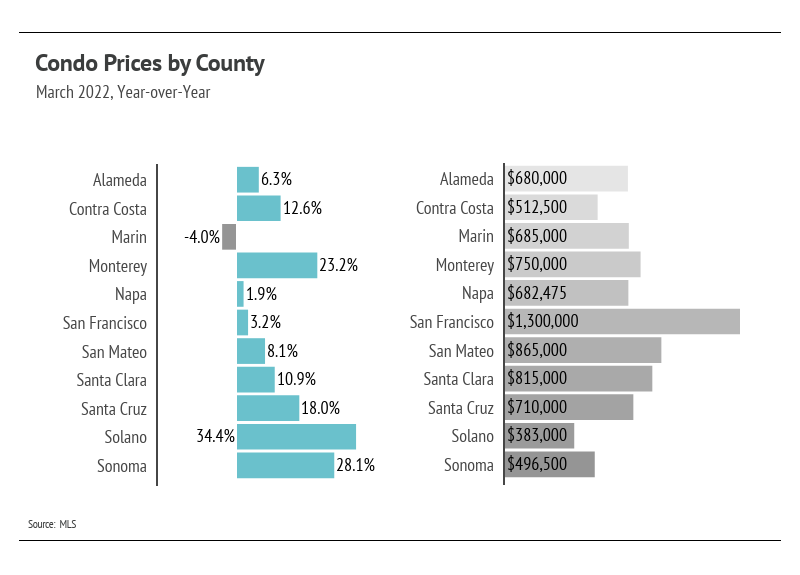
- Single-family home and condo prices increased across the Greater Bay Area over the past year:
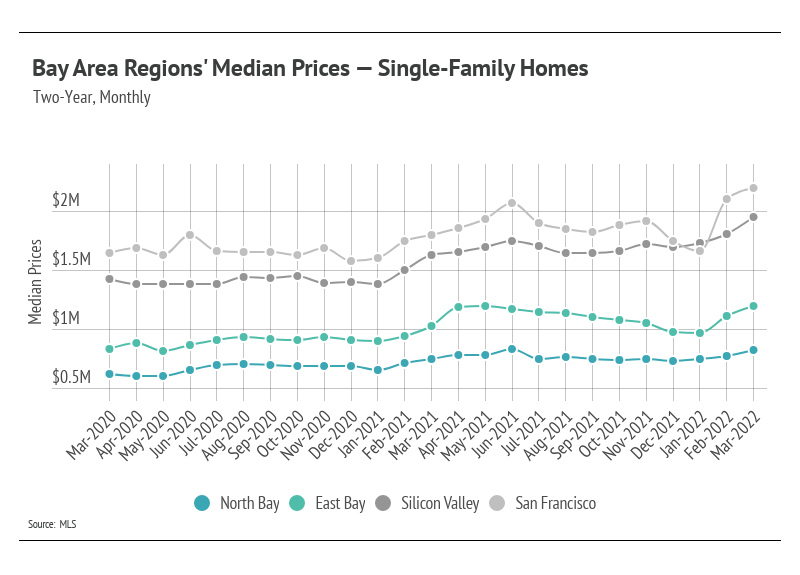
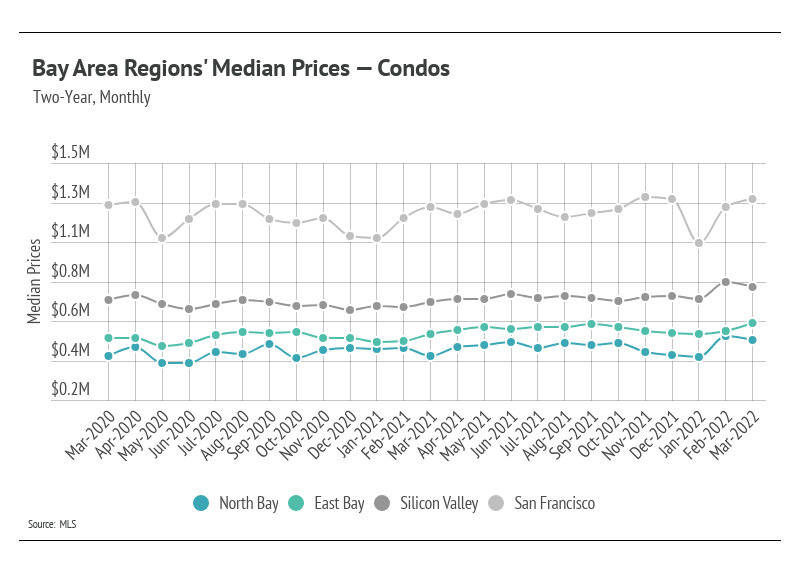
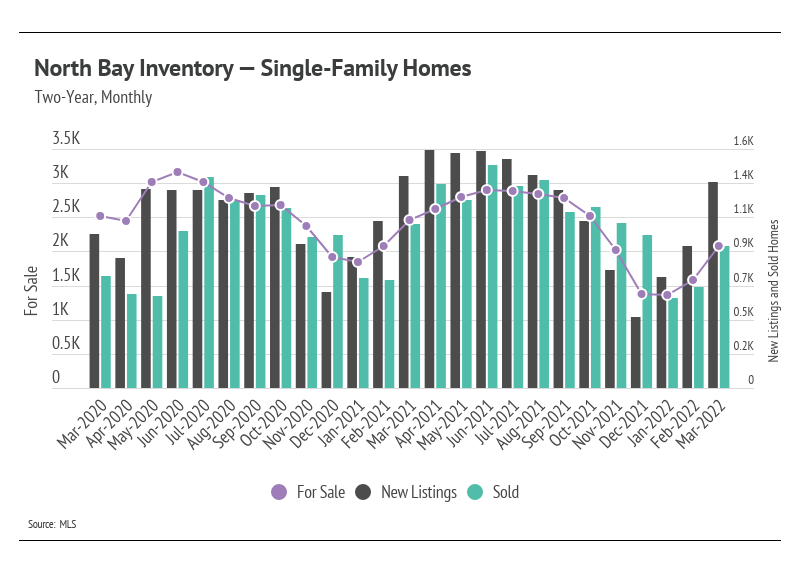
- North Bay: +8% for single-family homes; +13% for condos
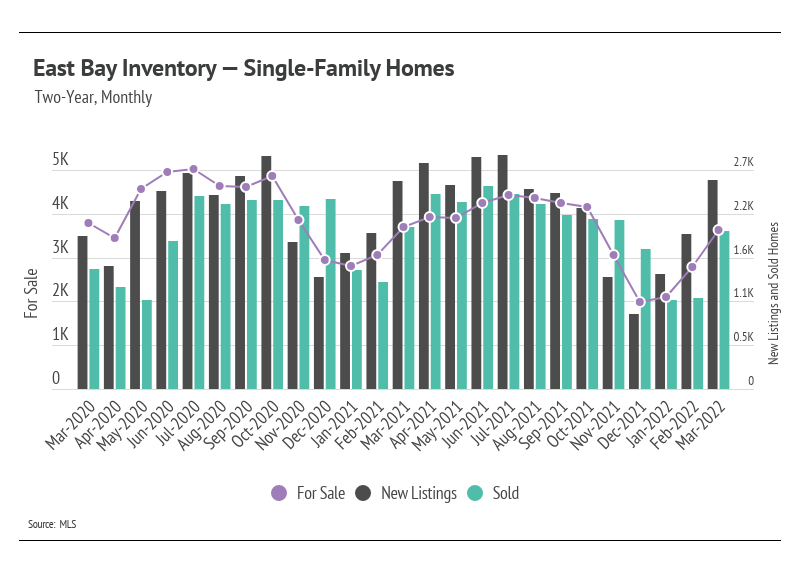
- East Bay: +19% for single-family homes; +10% for condos
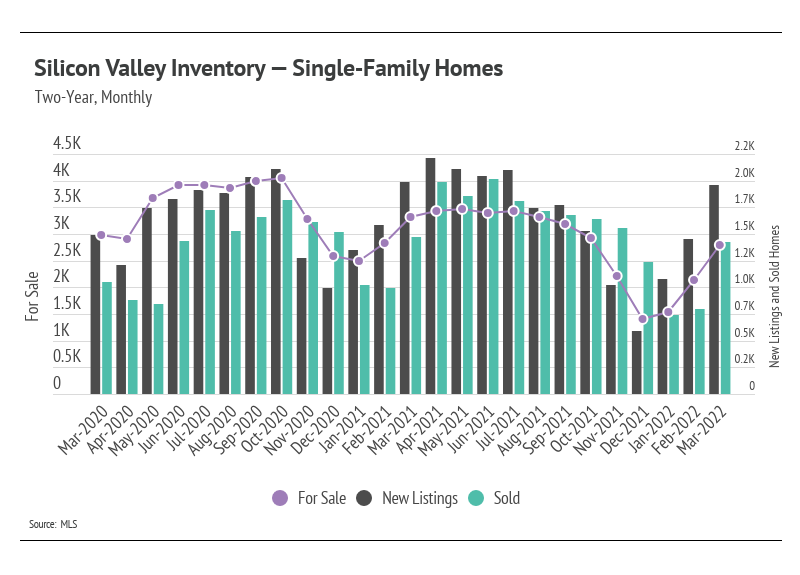
- Silicon Valley: +20% for single-family homes; +19% for condos
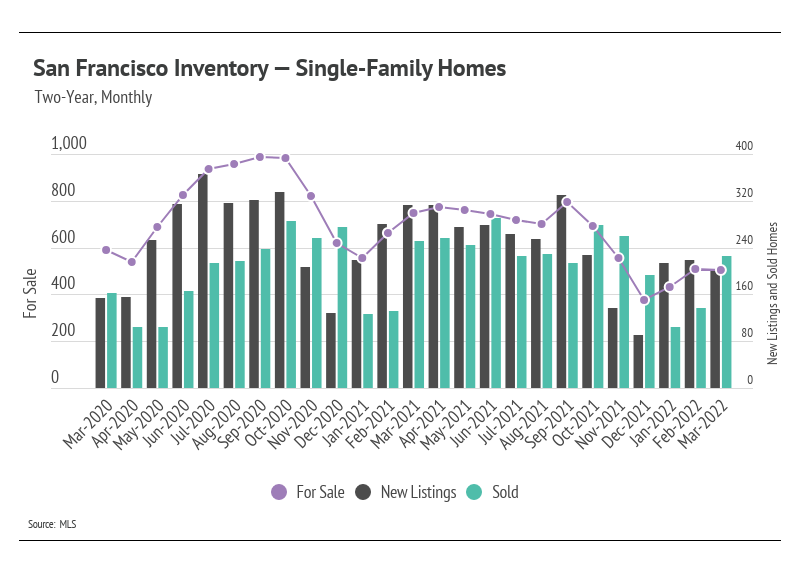
- San Francisco: +20% for single-family homes; +5% for condos
- Home sales remained elevated despite historically low inventory, which reflects the high demand in the Greater Bay Area.
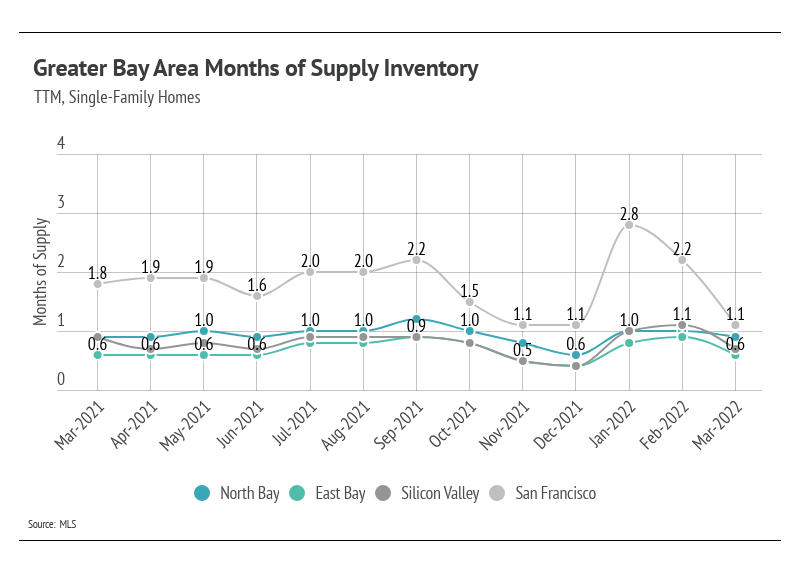
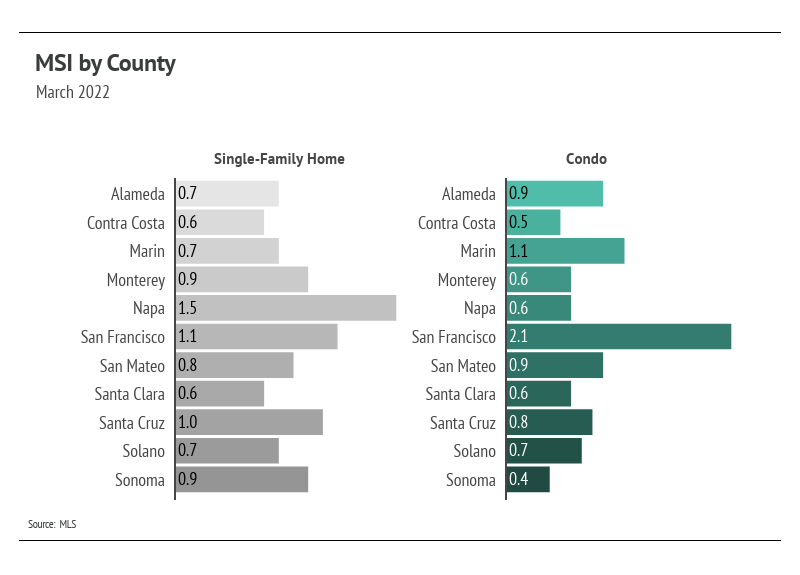
- Months of Supply Inventory further indicates a sellers’ market. Homes are selling quickly as buyers compete over the limited inventory.
Note: You can find the charts/graphs for the Local Lowdown at the end of this section.
Home prices hit record highs in front of Fed rate hikes
Single-family home prices rose to all-time highs in San Francisco and Silicon Valley, while North Bay and East Bay prices are just under their peak. Silicon Valley condo prices also reached an all-time high in February 2022. Mortgage rate hikes really only lower demand in the long-term, but in the short-term, demand increases as buyers try to lock in a lower rate. The Bay housing market has a major advantage in that people simply want to live there. The Greater Bay area tends to attract highly-educated, affluent individuals. This tends to have a snowball effect, making these areas more and more desirable places to live. Despite the huge increases in home prices over the past 12 months, the lack of housing supply will keep prices rising in the year to come.
The Fed is expected to raise interest rates by 0.25% six times this year, going from 0% to 1.50%. We are now entering a period where factors that affect prices are more mixed, unlike the past two years when all the factors caused prices to increase. Rising interest rates, which will hopefully curb the still-rising inflation, will make homes less affordable and dampen demand over the course of the year. But inventory is so low that even with less demand, the market will likely be undersupplied. It might seem counterintuitive that home prices can still appreciate after increasing so much over the past two years, but with inventory at record lows, home prices in 2022 will still increase — though at a slower rate than in 2021. With high sales relative to the available inventory, we anticipate a competitive market in the year ahead.
Record-low inventory persists
The Bay, like the rest of the country, has a historically low housing inventory. The sustained high demand and lack of new listings over the past year brought single-family home and condo supplies to record lows across markets. We are seeing that far more people want to live in the Bay area than want to leave. Sales have been incredibly high, especially when accounting for available supply, again highlighting demand in the area. Sellers can expect multiple offers, and buyers should come with competitive offers. The incredibly high demand we’ve seen over the past year might wane as interest rates increase; however, the supply is so low that the market can handle a drop in demand without negatively affecting prices. The 30-year average fixed rate mortgage hasn’t climbed above 4% yet, but it almost certainly will as the Fed starts raising rates. If mortgage rates reach 5%, demand will likely decline more substantially. In the next few months, demand will remain high relative to available supply.
Months of Supply Inventory further indicates high demand and low supply
Homes are still selling extremely quickly. The Days on Market reflects the high demand for homes in the Greater Bay Area. Buyers must put in competitive offers above the list price of the home.
Months of Supply Inventory (MSI) quantifies the supply/demand relationship by measuring how many months it would take for all current homes for sale on the market to sell at the current rate of sales. The average MSI is three months in California, which indicates a balanced market. An MSI lower than that indicates that there are more buyers than sellers on the market (meaning it’s a sellers’ market), while a higher MSI indicates there are more sellers than buyers (meaning it’s a buyers’ market). Currently, single-family home and condo MSIs are exceptionally low, indicating a strong sellers’ market.
Local Lowdown Data
Our team is committed to continuing to serve all your real estate needs while incorporating safety protocol to protect all of our loved ones.
In addition, as your local real estate experts, we feel it’s our duty to give you, our valued client, all the information you need to better understand our local real estate market. Whether you’re buying or selling, we want to make sure you have the best, most pertinent information, so we put together this monthly analysis breaking down specifics about the market.
As we all navigate this together, please don’t hesitate to reach out to us with any questions or concerns. We’re here to support you.