September Newsletter – Greater Bay Area Housing Market Updates

During July 2021 in the Greater Bay Area, the median single-family home price declined from the all-time high reached in June. Year-over-year, Greater Bay Area prices increased considerably, up 24%.

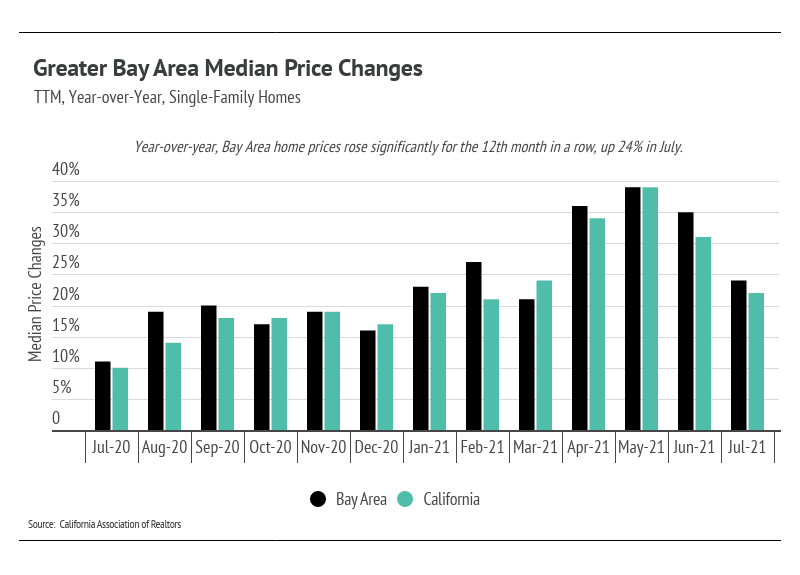
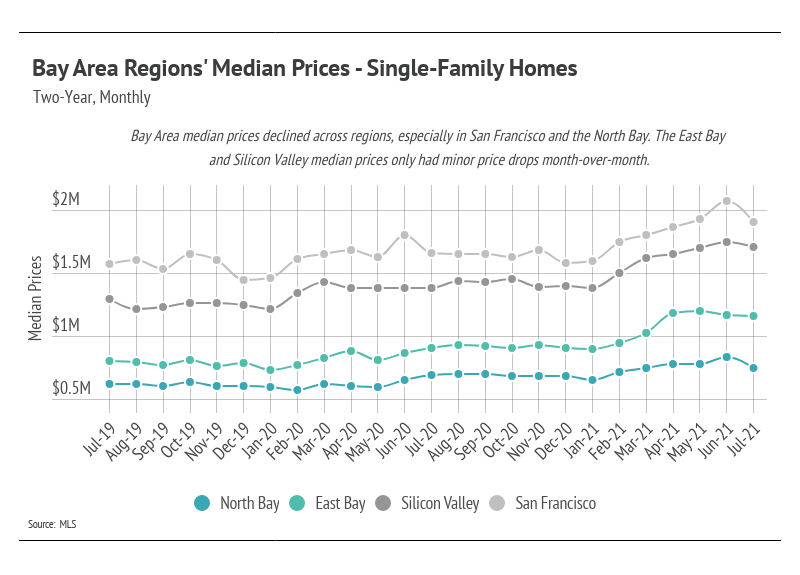
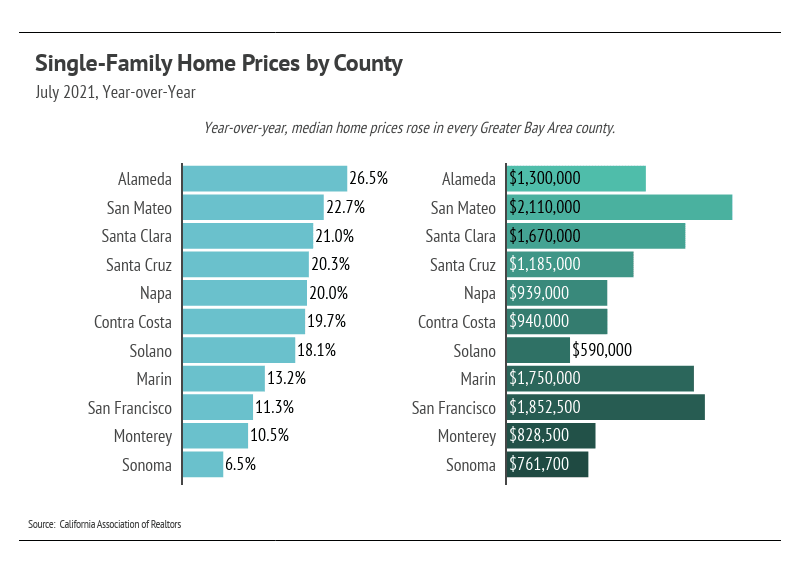
The median prices in all four regions of the Greater Bay Area declined month-over-month. Year-over-year, every county in the Bay Area is higher than last year.
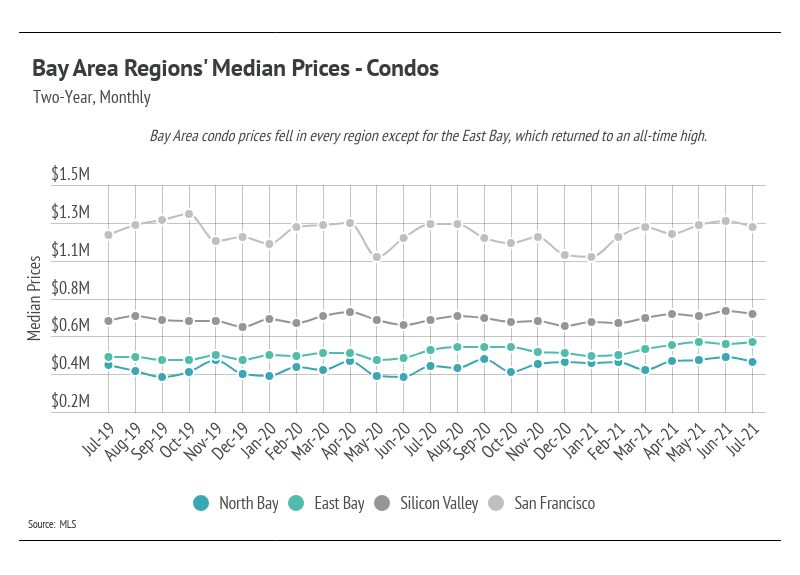
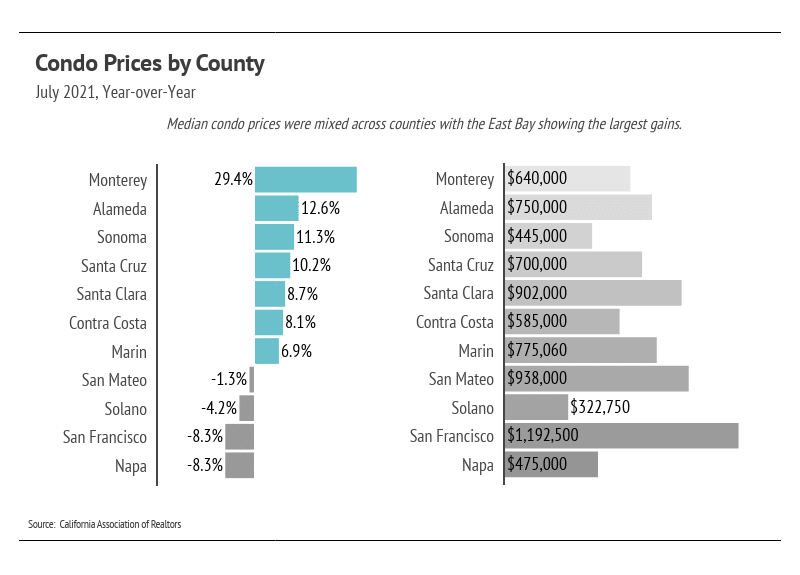
As you can see in the graphs below, median condo prices were mixed across regions and counties. Counties in the East Bay and Silicon Valley saw the largest gains.
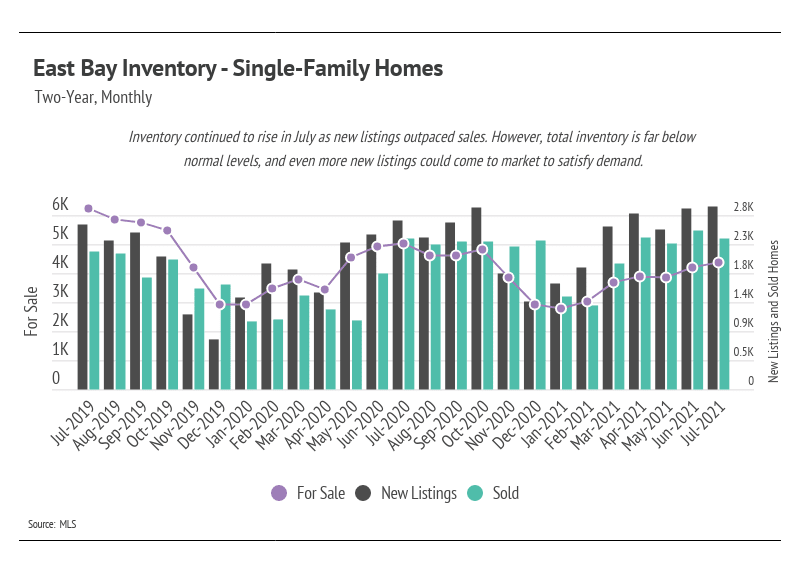
Single-family home inventory began to climb at the start of 2021 in anticipation of the spring season, when more sellers typically come to market, but has begun to decline once again. To gain a full picture of the current market, we must view it in the context of last year. In 2020, fewer people wanted to leave the Greater Bay Area, and more people wanted to move here. This trend drove inventory down to record low levels. New listings, therefore, improve the current market conditions. In July 2021, the total inventory in the Greater Bay Area had fewer homes for sale than it did in July 2020, so the higher number of new listings is a positive development for the housing market. The sustained low inventory will likely cause prices to appreciate throughout 2021.

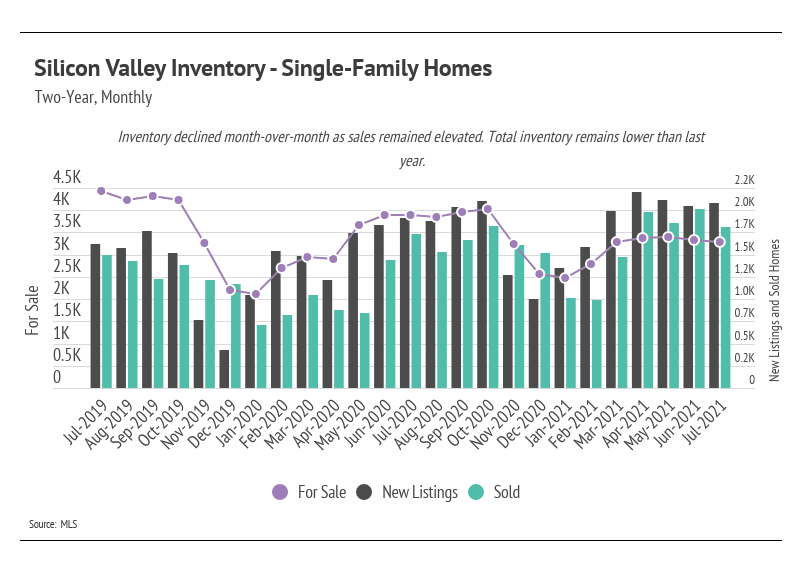
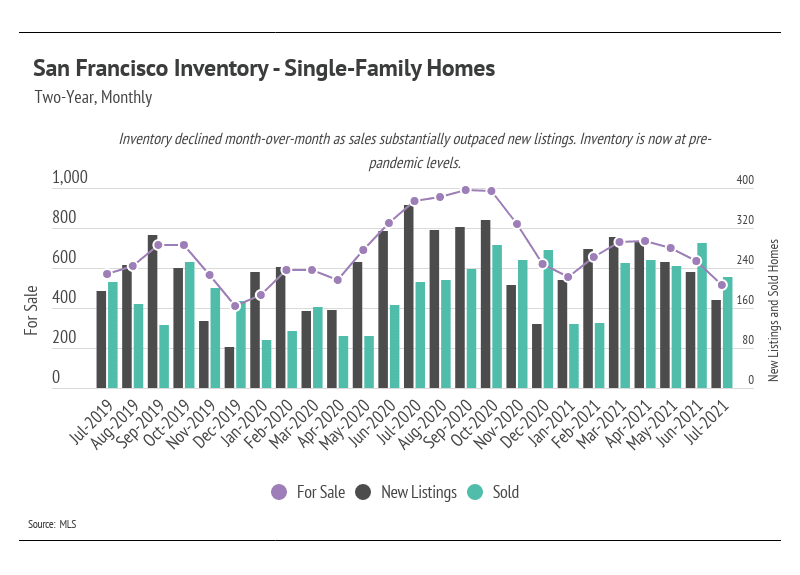
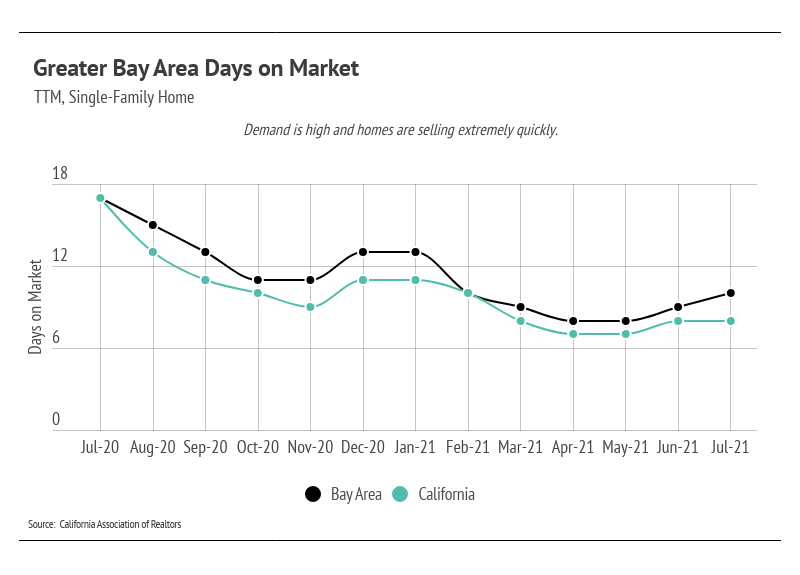
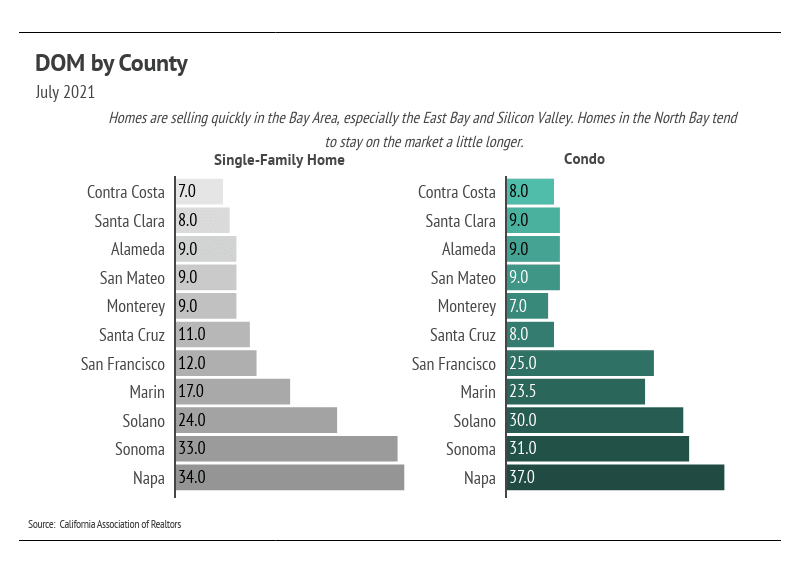
Both single-family homes and condos are selling quickly. As we will see, the pace of sales has contributed to the low Months of Supply Inventory (MSI) over the past several months.
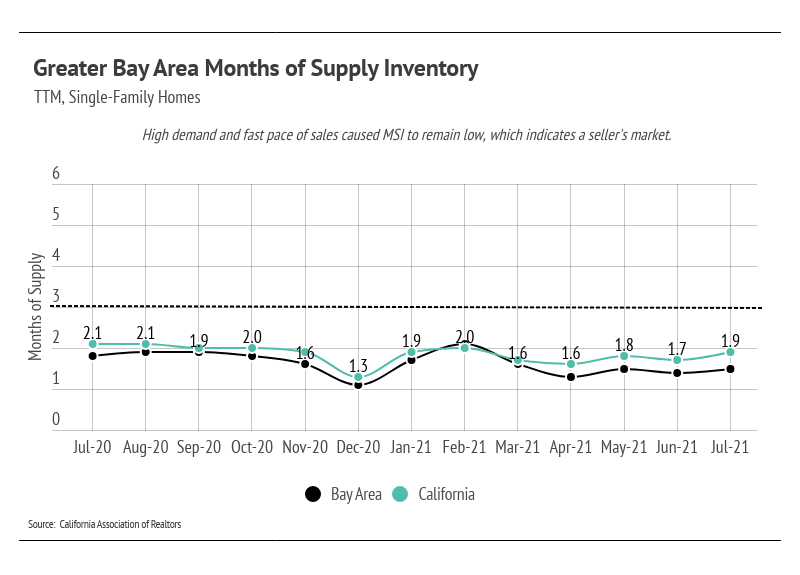
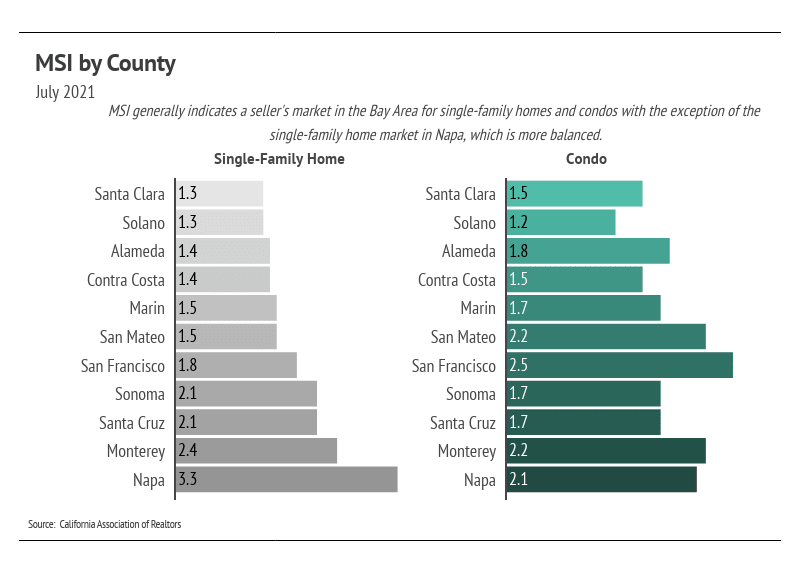
We can use MSI as a metric to judge whether the market favors buyers or sellers. The average MSI is three months in California, which indicates a balanced market. An MSI lower than three means that there are more buyers than sellers on the market (that is, it’s a sellers’ market), while a higher MSI means there are more sellers than buyers (that is, it’s a buyers’ market). In July 2021, single-family home MSI rose slightly but remained below two months of supply, indicating that the market still strongly favors sellers.
In summary, the high demand and low supply in the Greater Bay Area have driven home prices up over the last year, but the huge price appreciation is slowing. Inventory will likely remain historically low this year with the sustained high demand in the area. Overall, the housing market has shown its value through the pandemic and remains one of the most valuable asset classes. The data show that housing has remained consistently strong throughout this period.
We expect the number of new listings will continue to increase in the remaining summer months. The current market conditions, however, can withstand a high number of new listings, and more sellers may also enter the market to capitalize on the high buyer demand. As we navigate the summer season, we expect the high demand to continue, and new houses on the market to sell quickly.
As always, we remain committed to helping our clients achieve their current and future real estate goals. Our team of experienced professionals is happy to discuss the information we’ve shared in this newsletter. We welcome you to contact us with any questions about the current market or to request an evaluation of your home or condo.
Stay up to date on the latest real estate trends.




A Bay Area Realtor's approach to schools, neighborhoods, and long-term value for families making a move

You’ve got questions and we can’t wait to answer them.